Showing posts with label interview. Show all posts

Wednesday, 23 September 2020

Interview with Jordan Bell

Welcome to Jordan Bell's interview.


What genre would you say your novels fall into, or do they defy classification?

I write nonfiction books about science for kids in the 7-11 yr age bracket - the so-called “middle grades”. These are the kind of books that have short chapters and illustrations, but still deal with complex ideas. Putting “grown up science” in a story format means the ideas are easier for kids to take in and remember. 

What made you choose that genre?

I deeply believe that we need a scientifically aware and well educated citizenry to face the challenges of the future. I want to make sure that parents have the tools to help their children learn about important aspects of science, and that curious kids can self-educate in these areas if they are drawn to this field. 

How long does it take you to write a book?

I think in terms of actual writing, I am quite efficient, in that I can turn out 500-1000 words in a two-hour writing session; but because I’m balancing writing with a full-time job and parenting, I don’t get to spend as many hours writing as I’d like to! 

What is your work schedule like when you're writing?

I tend to take a couple of hours in the afternoon on the weekend; I’ll review where I left off and then start my next section. I’m a plotter, not a “pantser” so most of my next steps are pretty well mapped out. Although sometimes, something I think I can write about in one chapter, will end up taking me three chapters to accomplish! So my current work in progress draft is numbered Chapter 1, Chapter 2, Chapter 3a, 3b, 3c, Chapter 4, Chapter 5a, 5b, Chapter 6, Chapter 7. I’ll fix these up in the next draft of course! 

Tell me something about yourself your readers might not know.

I periodically take up a visual art or craft form - in the past it’s been painting, papercraft, sewing, and my current hobby is embroidery. It’s a great form of relaxation to have something practical to focus on, and I love creating something tangible when most of my creative expression is otherwise so cerebral. I’ve gone slightly down the rabbit hole of modern cross-stitch lately, and there are some really great patterns out there. I’m currently cross-stitching a Stag head in silhouette, to donate to a charity auction raising money for the Royal Flying Doctor Service. 

When did you write your first book and how old were you?

As a child I loved to write and illustrate my own stories into little books. And I’ve written a lot of short stories and poetry through my life. 

But my first real book, Aunt Jodie’s Guide to Evolution, was initially drafted in 2011-12, and then spent a long time hanging out on my hard drive after my daughter was born in 2013. Then in 2018 when my daughter started school, I got serious about doing something with it, and went through a crowd-funding and self-publishing journey to bring it to the world. 


What do you like to do when you're not writing?

I love music (lately I’ve been obsessed with the Hamilton musical); I enjoy going walking in the fields near my house; and I used to love meeting friends in cafés, but COVID has put a bit of a stop to that lately! 

What was one of the most surprising things you learned in creating your books?

In researching my current work in progress, I was really shocked by how many powerful carbon dioxide mitigation strategies already exist and are ready to be rolled out at scale. We could be doing so much more than we are. 

How many books have you written?

I published the first in my series of children’s books about STEM topics, Aunt Jodie’s Guide to Evolution in September last year. I’m currently working on the sequel, Aunt Jodie’s Guide to Climate Change

Do you Google yourself? What did you find that affected you most (good or bad)?

Weirdly, I share my name not just with a pro basketballer but also with another author (who writes “curvy romance” - quite different from my genre of children’s STEM!) If you google just my name it’s wall-to-wall basketball, but if you add “writer”, I come up as the fourth result, with a very nice article about my book in the main city newspaper from my state. So mostly, if I google myself it’s not too bad. 

As a child, what did you want to do when you grew up?

I loved writing and baking, so I could never decide between being an author and a chef. Adults used to suggest I split the difference and write recipe books, which I found really annoying at the time! 

How many unpublished and half-finished books do you have on your computer?

Just my current work-in-progress, which is 75% done, and the outlines for the next two books in the series. 

Bio and links:

Jordan Bell is a psychologist and educator with a passion for helping children and parents learn about science. As a parent to a curious primary-schooler who always wants to understand the “why?” of life, Jordan balances her knowledge of children’s developmental capabilities, with a practical lived experience of putting “grown up science” into words that little brains can understand.

Aunt Jodie's Guide to Evolution clearly outlines the science of evolution, in a child-friendly way. It makes an excellent gift option for adults wanting to help inspire a love of science in children aged 7-11yrs.

Not just another boring bedtime story, this science adventure into the ancient past makes learning about the basics of evolution fun and engaging, and uses words and concepts that are right for kids in middle and upper primary school. For anyone new to science, Aunt Jodie's Guides also include an easy-to-read glossary, explaining the scientific terms used in the book and how to pronounce them.

Aunt Jodie’s Guide to Evolution is available at www.gumroad.com/jordanbell 


Website: www.auntjodiesguide.com

Twitter: @AuntJodiesGuide

Facebook: https://www.facebook.com/AuntJodiesGuides

Critique Service for Writers


Writing Competitions

Join the D.I. Sterling Mailing List for News, Updates and Giveaways

Wednesday, 19 November 2014

Getting to know … Lisa Tenzin-Dolma


What genre would you say your novels fall into, or do they defy classification?
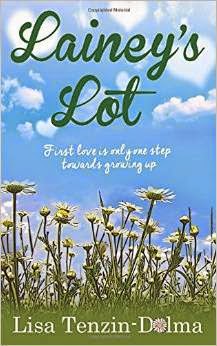
At the moment they fall into two genres. The Swan Lake is classed as contemporary fiction, and the Lainey Morgan books, starting with Lainey’s Lot, are Young Adult, though the Lainey books could be considered as crossover books.

What made you choose that genre?
It wasn’t a deliberate choice. The main characters popped into my head and refused to leave, and they led the storylines. Astarte, from The Swan Lake and Lainey from the YA books are both quirky, eccentric people and their stories naturally took on a darkly funny, dramatic tone.

How long does it take you to write a book?
Usually around three months, but with the Lainey books I started the first one about 8 years ago, set it aside halfway through to write rather a lot of commissioned non-fiction books, and only went back to it and finished it this year.

What is your work schedule like when you're writing?
I start early, take breaks to walk my dogs (and walking often clears my mind, too), set some time aside for assessing coursework from my canine behaviour students in the afternoon, usually finish writing early evening, and then catch up on mail until about 9pm. While I’m immersed in the story I tend to lose track of time, though, so often end up writing late into the night.

Where do you get your ideas for your books?
With fiction, mostly the ideas come to me out of the blue, starting with a character and expanding from there, though I have a couple of new novels on the go that started with a question: What if? This then sparked off a whole storyline.

The Swan Lake came about when a friend who was an Intensive Care nurse came to stay. We had a lot more wine than I’m used to and were laughing about some crazy things that had happened when I lived in the depths of the country in Ireland, throwing ideas back and forth about how my friend (a city dweller) would have coped with going back to nature. That gave me the idea for Astarte’s character, and the next morning I woke up with the whole story in my mind. It bugged me until I wrote it down, and the book was written very quickly.
 
http://a-fwd.com/uk=lorrmace-21&com=lorrmace-20&asin=B00OXYWOXKI started the first Lainey book when my daughter, Amber, was 13 years old, and it was great fun getting into the mind of an adolescent girl – all those dramas! Amber’s nothing like Lainey, but funnily enough life imitated art, in a way, because when I was halfway through writing the book Amber started going out with a boy who was remarkably like Kieran, Lainey’s boyfriend in the first book – even to his looks and musical talent! They both found that hilarious.

With non-fiction, the books develop through what I’m particularly interested in and would like to read books about. I love doing research and sharing ideas and knowledge!


When did you write your first book and how old were you?
I wrote my first book when I was 13. We lived in Malaysia at the time, and my class in school had to do a history project on London in 1665/1666. It was the time of the Great Plague, so for my project I wrote a novel about a girl who lived through that. It won me a prize at school but I wouldn’t have dreamed of sending it to a publisher.

My first published book was a non-fiction book called The Dolphin Experience. That came out in 1992, when I was 38.

What do you like to do when you're not writing?
I spend as much time as possible with my family, friends and my two dogs, and I do a lot of teaching work, which I love. I’m principal of The International School for Canine Practitioners, teaching dog psychology and behaviour to students all over the world, and I also run the Dog Welfare Alliance, a non-profit organisation that brings together professionals and the public and supports rescue centres globally.

I read a lot, in all genres, and there’s always a very varied pile of books on my coffee table. I play guitar, too, though not as much as I used to. 

What was one of the most surprising things you learned in creating your books?
How a story can completely take over your mind for the time it takes to write a book! This week I put a tongue-in-cheek post on Facebook about how chocolate can help the creative flow for me, and this set off a discussion with some author and screenwriter friends about how the characters in a story become very real while we’re writing about them. As one friend so aptly put it, it’s exhilarating and exhausting, and I agree – to really enter that world we’re creating, we need to tune in and live inside each character’s head (the unlikeable ones, as well as the likeable ones). They take on lives of their own.

How many books have you written?
I’ve had 22 books published, with another four books coming out next year: three of those are fiction and one’s non-fiction.

Which is your favourite and why?
That’s such a tough question to answer – it’s like asking me which one of my five children is my favourite! I can’t choose. Each book is different and I’ve thoroughly enjoyed writing all of them. Plus, fiction writing is totally different to non-fiction. With fiction I’m entering an imaginary world (that seems very real at the time), whereas while I’m writing non-fiction I think about what readers need to know about a subject, and how to make that interesting as well as informative.

The most deeply personal book I’ve written is Charlie: The Dog Who Came in from the Wild, which will be out through Hubble & Hattie in August 2015. It tells the story of how I rehabilitated a one-eyed Romanian born-in-the-wild feral dog who had never mixed with humans or dogs outside his social group before his capture. The book covers Charlie’s first 18 months with us, and described how I helped him overcome his many fears and become a fully integrated, much loved member of our family. It was an intense journey for all of us. I’d kept a journal throughout, so it was fascinating for me to sift through so many memories and remind myself of the extraordinary transformation that Charlie’s gone through.

As a child, what did you want to do when you grew up?
A writer!

What are you working on now?
I’m working on another Lainey novel, and have several more books on the back burner.

Bio
Lisa Tenzin-Dolma is the author of over 20 books, principal of The International School for Canine Practitioners, and founder of the Dog Welfare Alliance. She has five children and two dogs, and lives in a small village near Bath, UK.

Websites:

List of titles
- Charlie: The Dog Who Came in from the Wild (Hubble & Hattie, 2015)
- Lainey’s Lot. Accent Press. (two more Lainey books to come in 2015)
- The Heartbeat at Your Feet: A Practical, Compassionate New Way to Train Your Dog. Rowman & Littlefield
- Dog Training: The Essential Guide. Need2Know Books.
- Adopting a Rescue Dog. Phoenix Rising Press
- Mind & Motivation: The Spirit of Success. Phoenix Rising Press
- The Swan Lake. Phoenix Rising Press (to be republished by Accent Press 2015)
- Mandala Source Book (with David Fontana). Watkins Publishing.
- Natural Mandalas. Duncan Baird Publishers.
- Healing Mandalas. Duncan Baird Publishers.
- The Mandala Colouring Kit. Duncan Baird Publishers.
- The Celtic Mandala Colouring Kit. Duncan Baird Publishers.
- Celtic Mandalas Colouring Book. Watkins.
- Buddhist Mandalas Colouring Book. Watkins.
- Healing Mandalas Colouring Book. Watkins.
- 3D Mandalas. Watkins.
- Take Control with Astrology. Hodder Education.
- Teach Yourself Astrology. Hodder Education. McGraw-Hill.
- Understanding the Planetary Myths. Quantum/Foulsham.
- A-Z of Dreaming. Igloo Books.
(Also published by Igloo as Understanding Your Dreams and Dreams & Dreaming)
- The Glastonbury Tarot. Papaveria Press.
- Swimming with Dolphins. Foulsham.
- The Dolphin Experience. Foulsham.


Critique Service for Writers
Flash 500 Home Page: Flash Fiction, Humour Verse
and Novel Opening Chapter and Synopsis Competitions

Wednesday, 12 November 2014

Getting to know … Maggie Secara @maggiros


What genre would you say your novels fall into, or do they defy classification?
The Mermaid Stair is a fantasy, but that’s where genre stops being entirely clear. There are fairy tale elements. Ben and Raven use music and intuition to walk through time on behalf of the king of Faerie, so some people like to call it a time travel fantasy. There are elements of urban fantasy, but the cityscape is usually in the past, so it’s also historical fantasy. I’m a stickler for accuracy and do tons of research even if the segment is relatively short. And of course, they occasionally get chased by wolves, so there’s considerable adventure. Oh, and humour, too! So I wouldn’t say that defies classification, so much as laughing classification out of the room.

What made you choose that genre?
The odd thing is, I set out to write a mystery, featuring a hip college professor loosely based on someone I know. My friend’s specialty is the literature of myth and folklore, and before I’d gotten very far in the planning, the faeries had poked in their long pointy noses, and there I was.

How long does it take you to write a book?
That’s a moveable target. I wrote the first drafts of the three Harper Errant novels in 13 months. But Molly September, the pirate adventure I started in high school, took 40 years! Of course, I started it over four or five times, I finished it at least twice, and the whole market for romance changed radically over that time. So I guess that’s no surprise.

When did you write your first book and how old were you?
In junior high. I was probably 12 or 13. It involved a girl who goes back in time, somehow, to meet Robin Hood. (I had been a huge fan of the Richard Green Robin Hood series when I was a little girl.) He’s always been my hero. But I didn’t know nearly enough about, well, anything and certainly not enough about medieval England to write such a thing. It’s probably a good thing I ran out of steam before it got very far.

What do you like to do when you're not writing?
Read! But I also love movies and even a certain amount of television. Dr Who, Sleepy Hollow, and Supernatural are current favorites.

What was one of the most surprising things you learned in creating your books?
That every book is different, not just in content but in approach, even in method.

How many books have you written?
Five, but only four are novels. The other is a little history book called A Compendium of Common Knowledge 1558-1603. It’s a handbook of Elizabethan social history, life, manners, work, weddings, food, and all sorts of details of daily life. It’s aimed at writers, actors, and re-enactors in particular.

Which is your favourite and why?
Whichever one I’m talking about at the moment. The DragonRing has all those wonderful “first” moments. Ben’s first encounter with the Other Realm. First meeting with the king of Faerie. First visit to another time! And so on. King’s Raven has a more complex story, and the sidekick gets to be the center of the story. The Mermaid Stair is the most like a thriller, with the most truly evil villain I’ve written. Molly September has a terrific love story, and a great couple at its core. There’s simply no way to choose a favourite.

As a child, what did you want to do when you grew up?
An archaeologist! When I was 10, I became fascinated by Ancient Egypt, probably because of a series of articles in National Geographic. I read everything I could find. Even though that goal is long behind me now, the interest is still there. Though now my real interest have transferred to northern Europe and England in particular.

What are you working on now?
Island of Echoes is the next Ben Harper book, and it’s quite different – again.

The Harper Errant series:

A Compendium of Common Knowledge 1558-1603

Twitter: @maggiros


Critique Service for Writers
Flash 500 Home Page: Flash Fiction, Humour Verse
and Novel Opening Chapter and Synopsis Competitions

Wednesday, 5 November 2014

Getting to know … JD Smith @triskelebooks


What genre would you say your novels fall into, or do they defy classification?
My novels are all historical fiction, the first Tristan and Iseult, based on the classic legend, and the Overlord series is based on actual events which occurred in third century Roman Syria.

What made you choose that genre?
I don’t think I could have ever chosen anything else. I read a wide variety of genres, but I don’t think I could, and nor do I have any inclination, to write anything other than historical fiction.

How long does it take you to write a book?
Tricky one, as I actually wrote the books that are currently published over a number of years, before self-publishing really took off, and the market opened up to authors. I’m currently aiming for every six months.

What is your work schedule like when you're writing?
I tend to take a break between finishing one book, whilst it’s being edited and proofread and published, before starting the next. But I tend to try and get an hour or two writing or editing in every day.

Where do you get your ideas for your books?
Broadly speaking what has happened in the past and is documented, but more specifically I have always had a passion for the legend of Tristan and Iseult, and I discovered the Zenobia Antonia Fraser’s Warrior Queens.

When did you write your first book and how old were you?
I was 19, I think, so 12 years ago. It was awful and will never see the light of day.

What do you like to do when you're not writing?
I enjoy my job as a book designer very much, and spend an awful lot of time (and money) renovating my beautiful 19th century schoolhouse. Plus I have three children to keep me busy.

 
How many books have you written?
Three, and I’m currently working on the fourth (the third book in the Overlord series entitled The Better of Two Men).

Which is your favourite and why?
Right now, Tristan and Iseult, because it’s just been selected for the Historical Novel Society’s Indie Book of the Year 2014 – how fickle of me J


As a child, what did you want to do when you grew up?
I wanted to be an interior designer, and I still love doing that with my own house, but fate led me down the path of graphic design.

Bio
JD Smith, is an author of historical fiction, editor of Words with JAM and Bookmuse, and the mother of three mischievous boys. She publishes with the Triskele Books collective.


The Rise of Zenobia (Overlord I)
The Fate of an Emperor (Overlord II)


Critique Service for Writers
Flash 500 Home Page: Flash Fiction, Humour Verse
and Novel Opening Chapter and Synopsis Competitions