Showing posts with label Trish Nicholson. Show all posts

Monday, 15 May 2017

How to plan a successful book tour #writetip


by Trish Nicholson

A couple of years ago, after completing a successful writers’ workshop tour in Europe, I shared tips here on how to do it.

In June/July this year, I will be taking my new non-fiction, A Biography of Story, A Brief History of Humanity, on tour to present talks at festivals, bookshops and libraries in the UK. Arranging this different tour boosted some of my earlier tips but also produced new insights, so it seemed useful to write a new post.

When it comes to book promotion, all authors are now expected to do a major part of the work however they are published. Many authors struggle with this side of their career. But a book tour exposes your work to fresh readers, attracts publicity and forges promising contacts for the future.

Publishers arrange book tours for only a tiny minority of their authors. You can join that lucky band by planning your own:

Pick a location:
Competition is so keen that even publicists for bestsellers are scrambling to get their authors into the big national events. But there are advantages at regional and local levels. You need to be smart.


  • Focus on smaller festivals, especially if your book has a connection with the area; you already have local contacts (via social media for example); or you are known in the town.
  • Independent bookshops are often the best bet for author talks/readings – they may prefer evenings so as not to disrupt trade.
  • Most bookshops will host a ‘local author’ or a book set in its locality for a simple ‘meet and sign’ event.
  • Be flexible, some major bookstore chains offer group events for local authors. If it fits your tour calendar – join in, and shine.
  • Depending on the nature of your book, schools, colleges, libraries and interest groups may be happy to host you.

Pitch at the right time:
Start planning early and be aware that potential hosts may work with different time frames. Everyone is busy – make it easy for them.


  • Book festivals generally plan their programmes at least a year ahead, and need details to print their brochures four months beforehand.
  • Bookshops usually plan events 2–3 months in advance and will probably lose your request if you send it much earlier.
  •  If possible, arrange to meet in person, but don’t send emails on a Monday morning or Friday afternoon, and be prepared to send polite reminders.

Offer good value:
Unless you won the Booker Prize last year, simply offering your presence will not get you signed up.


  • Offer a reading, talk, demonstration, Q&A session or whatever fits your book and the theme of the festival or the speciality of the bookshop.
  • ‘Freebies’ help event hosts to attract bookings and make eye-catching displays. And they provide long-lasting promotion: my giveaways are bookmarks and tote bags printed with my book’s cover image.
  • Donating a signed copy of your book for a raffle or competition prize increases its exposure and desirability.
  • Festivals may have their own publicity materials but bookshops and libraries appreciate banners, posters, bookmarks, flyers, and a plate of cakes or wrapped sweets can draw attention to your signing table.
  • Performing for free makes you more attractive and helps self-funded local festivals and small independent bookshops.


Prepare, prepare, prepare:
Before you contact anyone, do your homework.


  • Most festivals have a theme. Research their past events and submission procedures, identify the current theme and pitch your proposal to fit.
  • Bookshops may have a speciality. If you search their sites to find stores that feature your genre, you increase your chances of acceptance.
  • Write a concise pitch – describe what you can offer, what their audience will gain and how it relates to your book (100 words).
  • Write a brief bio (50 words), and a book blurb (100 words).
  • Paste your proposal into the body of an email after a short introductory paragraph – people are wary of attachments from strangers.
  • Well before the event, start building your confidence.
  • Rehearse aloud and time a talk carefully – professionals don’t overrun.
  • For Q&A, identify likely questions and think about your answers.
  • Research venue locations to ensure you arrive on time.
  • Festivals usually let you sell your books – order enough copies.

Publicise your event:
Use social media to publicise your event with blog posts, your tour programme pinned to your Twitter stream, Face Book pages and Pinterest, and promote your hosts’ publicity. Adapt your proposal as a Press Release to local media for interviews or articles mentioning your event.

Show up and smile:
It is not unheard of for even seasoned authors to find only a couple of punters come to ‘meet’ them or hear one of their readings. Even a single reader deserves your smile, your grace, and your best performance. They will never forget it, and for the rest of their lives will tell everyone they know how brilliant you are.

******
A Biography of Story, A Brief History of Humanity is available from UK bookshops or worldwide from The Book Depository  [TBD link: http://www.bookdepository.com/A-Biography-of-Story--a-Brief-History-of-Humanity/9781785899492 ]
 Many more tips on writing, publishing and marketing can be found in Writing Your Nonfiction Book: the complete guide to becoming an author. [TBD link:  http://www.bookdepository.com/Writing-Your-Nonfiction-Book-Trish-Nicholson/9781784620660 ]
  Find out more about Trish’s books and read her articles at www.trishnicholsonswordsinthetreehouse.com and follow her on Twitter

@TrishaNicholson https://twitter.com/TrishaNicholson

Bio: Trish Nicholson is a social anthropologist and author of narrative non-fiction and short stories. She lives in New Zealand and is a member of the NZ Society of authors.


Critique Service for Writers
Flash 500 Home Page: Flash Fiction, Short Story and Novel Opening Chapter and Synopsis Competitions

Thursday, 16 April 2015

Setting up a book tour by @TrishaNicholson #writetip


How to set up a book tour by Trish Nicholson

A book tour is an excellent way for you to increase the exposure of your book, to meet potential readers, and to make many useful contacts for the future. It can also be fun. Even if you have a publisher, they rarely offer their authors book tours these days, so here are some tips from my own recent experience to help you create your own book tour whether you write fiction or non-fiction.

Where to tour: it’s not necessary to jet around the world – with a little imagination a successful tour can be arranged within your own region. It’s a good idea to boost your confidence by beginning the tour locally where you are already known, and then extend your reach to new opportunities beyond your comfort zone.

When to start: a book tour is not something you can do entirely alone. You need co-operation from others to host events, or provide venues and local publicity. So begin planning well in advance: eight to twelve months beforehand is not too soon to start looking for potential hosts and ‘partners’. Many bookshops, festivals and interest groups set their programmes a year ahead.

Who to contact: draw up a list of organisations likely to share an interest in your book. Writers’ and readers’ groups, libraries and bookshops are obvious, (although bookshops may not stock self-published titles, they are likely to support a ‘local author’, so it is worth approaching them). But consider wider possibilities. If you write for children or young adults, what about schools, colleges, clubs and discos? Does the setting of your book suggest particular locations, environments, historic sites? Think about where potential readers hang out and to which interest groups they might belong.

What to offer: based on your book, your skills and the organisations on your list, decide what you can offer that would be of mutual benefit. Readings and signings could be part of other activities such as an author talk, a workshop, a competition, or demonstration. For a significant activity, such as a workshop – or if you have to pay for a venue – you, or the host, may need to charge, but as you would expect, events that are free attract more interest. Some organisations offer a fee or a contribution towards travel, others do not. Decide in advance how to handle costs (and retain all receipts, they might be tax deductable).

How to prepare: before contacting anyone, you will need a brief author bio (50-100 words), a description of the activities you are offering (specific to each interest group), and a synopsis of your book (150-200 words). Provide these when approaching potential hosts, but also send them to local media for publicity, later. Make sure you have sufficient copies of your book to sell during the tour. If your book is only in digital form, think about creating alternative ‘physical products’ – a video, promotional bookmarks, postcards, reading/study guides, or handouts.

How to make contact: where possible, make an initial approach in person and follow up in writing; otherwise, send emails or letters, mentioning any mutual connections. It’s best to keep communications brief, and be patient: voluntary groups especially can be slow to reply. Maintain careful records of correspondence and, as people respond, build up a programme that is workable for you. For example, if being away over night is a problem, allow for this in your scheduling.

How long to tour: this depends on your circumstances, but a concentrated effort – several events within two or three weeks, for example – is likely to create more word-of-mouth buzz and media attention. But be realistic about what you can achieve. It is better to organise fewer events than to inconvenience people with last minute cancellations.

What to do after the tour: during the tour, it may seem as if a surge wave is bowling you along, and it may leave you feeling beached once it is over. Extend the benefits of your tour by talking and writing about it. Use social media to thank your host organisations publicly, and share the events more widely with blog posts or magazine articles. And of course, follow up on contacts or promises you made during the tour.

A successful book tour requires effort and resources. You may sell an encouraging number of books – people are more likely to buy your book if they have met you – but it is not only about selling. It is about your book being discovered, and the longer-term strengthening of your ‘author platform’.

Touring with your book can be a satisfying and rewarding experience with many spin-offs for the future. Whether you want to consider a book tour or other marketing methods, you will find many more promotion tips for fiction as well as non-fiction, including how to write a bio, synopsis, and press release, in Writing Your Nonfiction Book: the complete guide to becoming an author

Author bio: Trish Nicholson writes short stories and narrative non-fiction on a range of subjects, including books on writing with which she recently completed a successful book tour in the UK and Netherlands. Trish lives in New Zealand and is a member of the NZ Society of Authors. You can read more of her writing tips on her website: http:www.trishnicholsonswordsinthetreehouse.com


Critique Service for Writers
Flash 500 Home Page: Flash Fiction, Humour Verse
and Novel Opening Chapter and Synopsis Competitions

Monday, 31 March 2014

The Writing Process


I was asked to take part in The Writing Process Blog Tour by Barbara Scott-Emmett, a talented novelist whose latest work, DELIRIUM: The Rimbaud Delusion, will be published through Triskele Books later this year.

The idea of the tour is that all the writers who take part answer the same four questions about their work and their writing process, and together they form a great electronic blogging chain in the ether! You can read Barbara’s blog (and find out more about her writing) here. I have asked Trish Nicholson, Nik Morton and Joan Fallon to grab the baton from me – read more about them at the end of this post.

What am I working on?
I’m currently splitting my time (and sanity) between two, no three, maybe four, major projects.

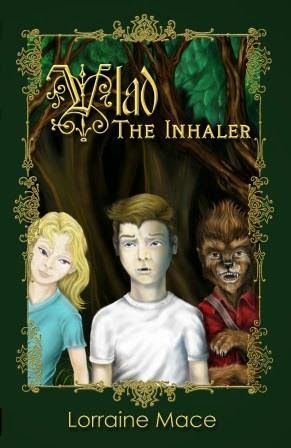
Let me explain: as Lorraine Mace, my debut novel for children, Vlad the Inhaler, is due for release this week. The publishers are very keen to see the next in the trilogy, so I am working flat out on getting that to them by the end of March.

I am also working on a new children’s series: sort of Randall and Hopkirk (deceased) meets Buffy (without the vampires). This will feature a young boy who gets saddled with a ghost who bullies him. Together they have to fight off all the dreadful supernatural entities I can think up and save the world at the same time.

As Frances di Plino, my D.I. Paolo Storey crime series seems to have found a strong fan base and the publishers have asked for the fourth Paolo book. Looking for a Reason will carry forward the lives of the main characters, but as with each of the first three books, the crime being investigated is completely different to anything in the earlier novels.


And then, returning to my Lorraine Mace persona (the real me) I have a literary novel that has been on the back burner for so long it’s a wonder it hasn’t shrivelled up and died. One day, I keep promising myself, one day I'll write The End on that book.

How does my work differ from others of its genre?
Wow, what a difficult question!

The crime series is different to many in the genre because it is character led, rather than plot driven. In most crime novels, the plot is the be all and end all of the writing. I like my characters to develop over a series, so that what happens in their private lives affects the way they interact with each other and also impacts on the crime solving aspects of each case.

With my children’s novels, I wanted to concentrate on issues that matter to children: bullying, being different, having to cope with the fallout from adult’s actions. At the same time, I wanted to create characters who readers will care about, but who are themselves different and so don’t ‘fit’ into mainstream lives. From the initial feedback I’ve received on Vlad, it seems I’ve achieved that.

Why do I write what I do?
Quick answer: because the damn voices in my head keep nagging me to tell their stories.

Longer answer: because each book reflects issues I care about and want to bring to the attention of my readers. Novels are meant to be entertaining, and I hope mine are, but that doesn’t mean they have to be light and fluffy.

In all my works of fiction I deal with the unpleasant issues so many of us have to face on a daily basis. I try to portray those issues in a way that will make people think about the lives of others, even if only for the time it takes to read the book.

How does my writing process work?
It starts with my husband writing a day by day programme for me each month. My day job consists of running my private critique business, working as a mentor to novelists, managing three international writing competitions, running writers’ workshops, my regular columns for magazines, being a short story judge and critique provider for Writers’ Forum and various other writer-related activities that seem to take up a great deal of time.

I dump all this information on my long-suffering husband and he then plans my month so that everything gets done when it should – and somehow rearranges the universe so that I have time to write my novels.

Because I have so many other activities, I have to be really disciplined when ‘creative writing’ appears on programme. I set myself a word target for those days and will not leave the computer until I’ve reached my goal.

I tend to work to a rough outline, so that I know before I even open the file exactly what needs to be covered in the chapters and scenes for the day.

Before I became so busy (in fact, before I was published) I used to write when the muse deigned to visit. I no longer have the luxury of waiting for her to arrive. I now have to reach out and grab the muse by the throat and make her sit next to me during the hours allocated to my novels. I keep her tethered to my office chair, just in case she tries to sneak off.

It seems to be working!

As promised at the start of this post, here are the three baton carriers for the next stage of The Writing Process Blog Tour.


Dr Trish Nicholson (@TrishaNicholson) began her thirty-year writing career as a columnist, feature writer and author. She writes short stories and narrative non-fiction, and is currently published by Collca (UK). Among her recent titles are: Inside Stories for Writes and Readers, a companion on creative writing, and Writing Your Nonfiction Book: the complete guide to becoming an author.


Nik served in the Royal Navy. He now lives in Spain. He has sold many short stories and edited several books and magazines. His book Write a Western in 30 Days has been a bestseller. This year sees publication of Wings of the Overlord, a fantasy quest jointly written with Gordon Faulkner, The Magnificent Mendozas, his sixth western for Robert Hale, Sudden Vengeance and Catalyst, both crime thrillers from Crooked Cat.


Joan Fallon was born in Scotland, but grew up in England. For many years she was a teacher and later a management consultant specialising in Behavioural Studies.  In 1998 she moved to Spain, where she began to write.  Her novels centre on a strong female character and explore the emotions and relationships of the protagonist.  Being a History graduate, Joan enjoys setting her novels in a historical context, researching either English or Spanish history.

Trish, Nik and Joan will answer the same four questions next week (7 April 2014). Do visit their blogs to discover more about the writing life and the process of creativity.

Critique Service for Writers

Flash 500 Home Page: Flash Fiction, Humour Verse
and Novel Opening Chapter and Synopsis Competitions